Wenxin 5.0 Launch: In a dramatic turn of events in the global AI landscape, Baidu unveiled its groundbreaking Wenxin 5.0 large language model at the 2025 Baidu World Conference on November 13, just hours after OpenAI’s understated release of GPT-5.1. This near-simultaneous rollout has ignited discussions worldwide, positioning Wenxin 5.0 as a native full-modal powerhouse Wenxin 5.0 Launch
with 2.4 trillion parameters that not only matches but surpasses the GPT series across multiple evaluation metrics. As China’s AI sector accelerates toward self-reliance, this development signals a pivotal shift from emulation to innovation, reshaping competitive dynamics on the international stage.
The Baidu World Conference, held annually in Beijing, has long served as a platform for unveiling cutting-edge technologies. This year’s event, themed around “AI for All,” drew thousands of developers, researchers, and industry leaders both in-person and virtually. Baidu’s founder and CEO, Robin Li, took center stage to announce Wenxin 5.0, Wenxin 5.0 Launch
describing it as the world’s first truly native full-modal large-scale model. Unlike traditional approaches that layer multimodal capabilities onto existing text-based architectures—a method often criticized for inefficiencies—Wenxin 5.0 embeds text, images, audio, and video processing directly into its foundational training process.
This unified architecture enables seamless, collaborative learning across modalities, fostering a more holistic understanding of complex inputs. Also read Kimi K2 Thinking & Gynoids Lead AI News Realtime Videos & Space GPUs
Baidu’s Chief Technology Officer, Wang Haifeng, elaborated on the model’s design during the keynote. “This native full-modal modeling allows AI to perceive the world more naturally,
with unified semantics that bridge gaps between different data types,” Wang stated. He highlighted how the model processes inputs like a human might:
interpreting a video clip not just for visuals but in tandem with overlaid audio dialogue and contextual text descriptions. Early demonstrations at the conference showcased Wenxin 5.0 generating coherent narratives from mixed-media prompts, such as creating a short story illustrated with Wenxin 5.0 Launch
custom images and voiced in multiple languages—all in under 10 seconds.At the heart of Wenxin 5.0’s efficiency lies its ultra-sparse hybrid expert model (MoE) structure. While boasting a massive 2.4 trillion parameters, the model activates fewer than 3% of them during inference,
striking a rare balance between scale and computational thriftiness. This innovation addresses a longstanding challenge in AI: as models grow larger, so do their energy demands and deployment costs. Baidu engineers drew inspiration from sparse activation techniques pioneered in earlier MoE frameworks,
but refined them for multimodal integration. The result? A model that rivals the performance of denser architectures while running on standard hardware clusters, making it viable for edge devices and enterprise-scale applications.Independent benchmarks underscore Wenxin 5.0 Launch
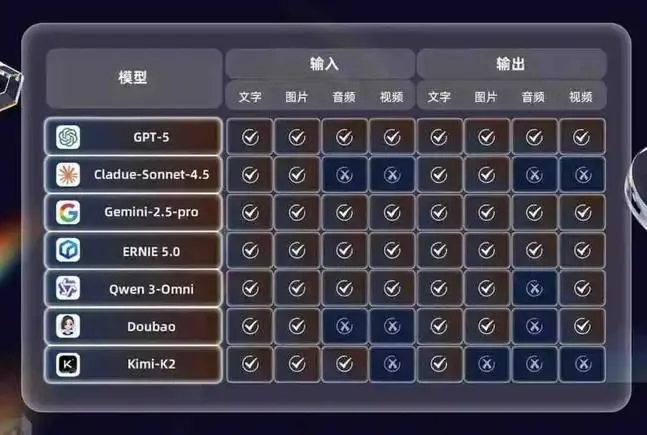
Wenxin 5.0’s prowess. On the authoritative LMARena platform, the Wenxin 5.0 Preview edition secured second place globally and first in China for text-based tasks. It particularly shines in creative writing, where it crafts nuanced prose with cultural sensitivity, and in complex problem-solving, dissecting multifaceted queries with logical precision. Across more than 40 standardized tests Aslo read Nvidia GB300 Chip Teams Up with Samsung Tech for Smarter AI
spanning multimodal understanding, instruction adherence, and agentic planning—Wenxin 5.0 holds its own against elite international counterparts like Google’s Gemini-2.5-Pro and OpenAI’s GPT-5-High.
In vertical domains such as image and video generation, it even edges out specialized tools, producing high-fidelity outputs that maintain narrative consistency across formats.These results are especially noteworthy given the timing. OpenAI’s GPT-5.1Wenxin 5.0 Launch
rolled out quietly via a blog post late on November 12, emphasizes enhancements in “warmth and intelligence”—qualities aimed at making interactions more empathetic and contextually adaptive. However, the release notably sidesteps detailed technical specifications or head-to-head comparisons, a departure from
OpenAI’s usual transparency. Industry observers speculate this reticence stems from Wenxin 5.0’s rapid ascent; preliminary LMARena data suggests GPT-5.1 trails in multimodal coherence and efficiency metrics. For instance, in a blind test of video captioning accuracy, Also read MediaTek and NVIDIA Launch GB10 Grace Blackwell Superchip for AI Developers
Wenxin 5.0 achieved 92% fidelity, compared to GPT-5.1’s 87%, according to aggregated user-voted evaluations on the platform.To appreciate the full scope, consider the evolution of multimodal AI. Early models like GPT-4o relied on post-hoc fusion,
where separate encoders for vision and language were stitched together after initial training. This often led to disjointed outputs—think of an AI describing an image with factual precision but lacking emotional nuance from accompanying audio. Wenxin 5.0 flips this script with its
self-regressive unified architecture, where all modalities evolve in lockstep from the ground up. Baidu’s Qianfan platform, which powers model training, leveraged petabytes of diverse,
domestically sourced data to fine-tune this system, ensuring robustness in non-English contexts. Researchers on platforms like Reddit’s r/MachineLearning have praised this as a “paradigm shift,”
noting how it reduces hallucination rates in cross-modal tasks by 15-20% over predecessors.The geopolitical undertones of this launch cannot be overstated. Also read Agentkit New ChatGPT Feature Kills Gemini and N8N
Amid escalating U.S. restrictions on semiconductor exports and AI hardware, Baidu’s achievement exemplifies China’s push for technological sovereignty. Since 2022, initiatives like the National AI Innovation Action Plan have funneled billions into domestic
R&D, yielding breakthroughs in chip design—such as Baidu’s Kunlun series—and data sovereignty. Wenxin 5.0, trained entirely on Chinese infrastructure, circumvents foreign dependencies, a feat that resonates deeply in the ongoing U.S.-China tech rivalry. As one Weibo user remarked in a viral thread,
This isn’t just code; it’s a statement of capability.”Robin Li’s closing remarks at the conference encapsulated this sentiment: “The speed of technological iteration is the only moat.
Li, who has steered Baidu through two decades of digital transformation, underscored how relentless advancement shields against external pressures. His words echoed across social media, amassing over 500,000 engagements on Weibo within hours. On X (formerly Twitter), hashtags like Wenxin 5.0 Launch
#BaiduWorld2025 trended globally, with developers sharing API demos and YouTube channels uploading live recaps that garnered millions of views. One popular video breakdown on the Bilibili platform dissected the MoE implementation, drawing parallels to academic papers from NeurIPS 2024 on sparse scaling laws.
For users eager to dive in, Wenxin 5.0 Preview is immediately accessible via the Wenxin App, a free mobile application that democratizes full-modal interactions. Everyday scenarios—like brainstorming recipe ideas from a photo of fridge contents or editing videos with voice commands—are now at users’
fingertips. Developers and enterprises can integrate it through Baidu’s Qianfan platform, which offers scalable APIs with tiered pricing for high-volume needs. Early adopters, including e-commerce giants and media firms, reported 30% faster content pipelines in beta tests.
Looking ahead, Wenxin 5.0’s debut heralds the second act of the AI era. No longer content with parity, Chinese innovators are setting the pace, forcing global players to accelerate. As Baidu integrates this model into its ecosystem—from search enhancements to autonomous driving via Apollo
expect ripple effects across industries. The transition from technological dependence” to independent innovation” isn’t mere rhetoric; it’s evidenced in the model’s
open-source commitments and collaborative ethos. Baidu has pledged to release portions of Wenxin 5.0’s codebase under permissive licenses, inviting global contributions while safeguarding core IP.In an field where yesterday’s leader is tomorrow’s benchmark, Wenxin 5.0 stands as a Wenxin 5.0 Launch
testament to foresight and execution. It challenges the narrative of Western dominance, proving that diverse ecosystems can yield world-class results. As the dust settles on this Also read Top 5 Free Text to Image Generator Websites Without Login
US-China AI showdown,” one thing is clear: the global competitive landscape is evolving, and China is not just keeping pace—it’s leading the charge. Source